

Sourcing Produce to Support Local Farmers and Families
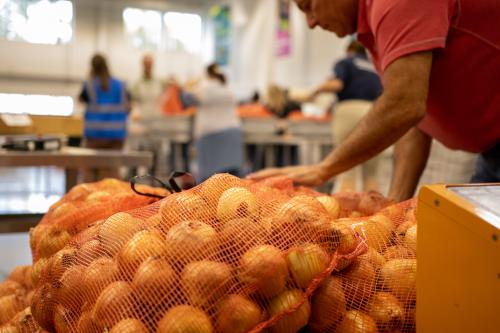
If you’ve ever been to the Second Harvest Heartland Volunteer Center for a food packing shift, chances are good that you spent a couple hours with a pallet-sized bin of onions, potatoes, or apples.
Chances are also good that those bins of fresh produce that you helped repack came from nearby. Second Harvest Heartland works with more than 150 local farms, some of which provide the bulk potatoes, onions, and apples our volunteers repack each week to send out to food shelf partners.
Emily Tucker and Sarah Andersen are members of the Second Harvest Heartland Sourcing team. In their roles, they make sure there’s enough of each variety of produce coming into the food bank to fulfill hunger-relief partners’ orders each week. “Sarah will look at the forecast and our demand for the upcoming weeks and month,” explains Emily. “She says we need this many loads of potatoes and this many loads of onions, and I call up our farmers.”
Working with local farmers to help them donate extra produce to the food bank has a variety of benefits. Transportation is less expensive and there’s less environmental impact when we’re able to source locally. There’s also a quicker turn-around time for orders, meaning the freshest possible food is going out to our neighbors. “We have potato growers, onion growers, and an apple grower that are within a day or even a couple of hours from here,” says Emily.

Although the strongest time for local sourcing is during Minnesota’s harvest season from July to October, Second Harvest Heartland gets local produce for much of the year. When we’re not able to get local produce, our Sourcing team works with other Feeding America food banks around the country to tap into their grower networks. “We're always going to look local first, though," says Sarah. "We want to make sure that we are supporting them in the way that they're supporting us.”