

Partnership Brings Much-Needed Support to Rural MN
Worthington is a small Minnesota town with big heart. Over the last thirty years the population has tripled thanks to a wide array of jobs brought on by the JBS pork plant in town. Spanish, Eritrean, and Somali neighbors along with white and native Minnesotans make up a varied patchwork of the 20,000+ Worthington metro area.
Like many rural communities, Worthington faces some challenges meeting the food needs of its diverse population. Neighbors in need of food support turn to Worthington Christian Church Food Shelf (a Second Harvest Heartland partner). When Second Harvest received a generous offer from a longtime corporate donor with offices in Worthington, we knew just who to call.
Compeer Financial is a member-owned Farm Credit cooperative providing financial services to support agriculture and rural communities. This summer, Compeer reached out with an open mind and designated dollars from their Fund for Rural Support.
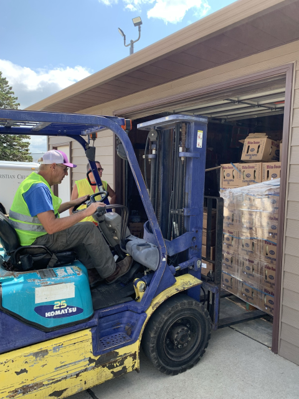
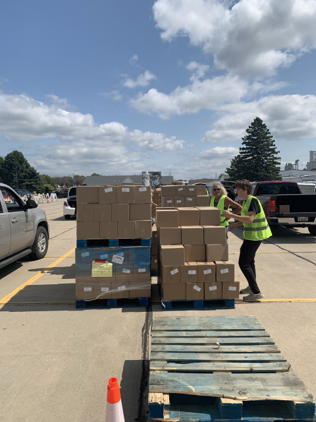
In collaboration with Worthington Christan Church and Seeds of Justice (a group of leaders representing the growing, diverse community of Southwest MN), Second Harvest Heartland arranged a one-time pop-up food distribution sponsored by Compeer on August 26th. Together, 620 food boxes reached 460 households in the span of just four hours.
With insights from the Church on when and where to go, we were able to maximize the number of families served by scheduling our mobile distribution during shift-change at the local pork plant. That means folks who were scheduled at 3pm had time to pick up groceries before work, and those ending shifts at 3pm could leave with food for their families.
Seeds of Justice played an important role in ensuring anyone who attended the distribution could get help – and information on additional resources – in their native language. This kind of cultural connection helps break down societal barriers to food support that emerge naturally as populations change. Plus, distribution included items like corn masa flour, jalapenos, black and pinto beans – foods neighbors of diverse cultural backgrounds prefer.
As we work to Make Hunger History, partnerships and targeted interventions like these make a meaningful difference. With rural communities facing some of the highest rates of food insecurity in America (3% higher on average, according to the USDA), investing in food support in places like Worthington moves the needle in a big way. It just takes the right group of partners coming together to help Minnesota stay fed.